What 73,500 People Revealed About Betrayal —
And the Three Discoveries That Are Going to Change How You See Your Healing
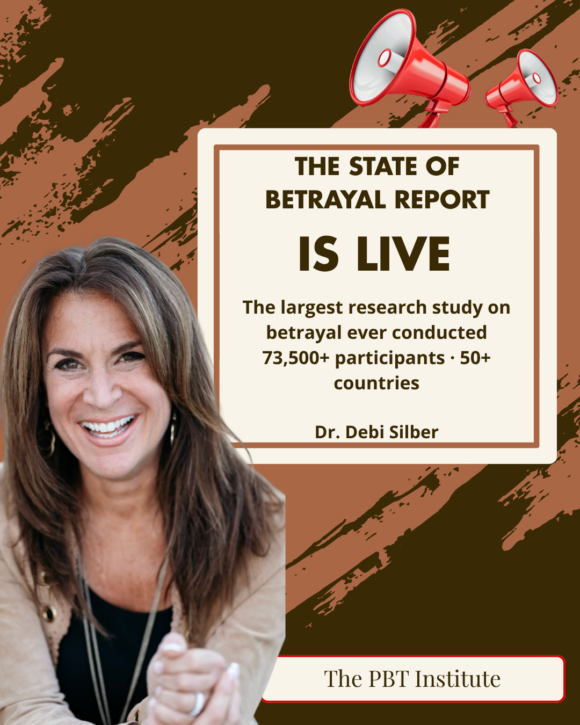
Years of research. 73,500 responses. Three discoveries that change everything — and a research report that finally gives people who’ve been through betrayal the map they’ve been looking for.
Today is the day.
The State of Betrayal Report is live — the most comprehensive research publication on betrayal recovery ever produced. And I wanted to walk you through everything it contains, because I think when you see the numbers, and hear the three discoveries that came out of them, a lot of things are going to make sense that haven’t made sense before.
If you have been through betrayal — or if you love someone who has, or if you work with people who are carrying this — keep reading. This is for you.
The Question That Started It All
For years before I went back for my doctorate, I was working with all kinds of people — including people who had been through betrayal. Partner infidelity. Family deception. Workplace betrayal. Institutional betrayal. The full range of what it means to have someone you trusted break that trust.
And I kept noticing something I couldn’t explain.
These were people doing everything right. Therapy. Self-help. Journaling. Support groups. Personal development work. They were trying — genuinely trying — with everything they had. And still not getting through it.
Not because they weren’t committed. Not because they lacked insight or willingness. But because something about the approaches available to them wasn’t designed for what they were actually dealing with.
And then I went through my own betrayal. I was desperate. I had four kids, six dogs, a business — I had to get it together. I looked for a book, a course, a mentor. Nothing specifically addressed what I was going through. The gap was real, and I was living in it.
So at 50 — after not being a student for 30 years — I went back to school for my PhD. I designed the research myself. And I started collecting data.
That was a decade ago.
Today that database contains more than 100,000 responses from people across 50 countries. Along with three discoveries that changed how I understand betrayal, healing, and what people who’ve been through this actually need.
But first — the numbers. Because the numbers are extraordinary.
What 73,500 People Told Us
The State of Betrayal Report draws from two research datasets. Together they represent 73,500 completed responses — every single one from a person who raised their hand and said: yes, I’ve been through this. Yes, I’m trying to heal. Yes, I want to understand what’s happening to me.
Behavioral impact
| 94.7% | are still being triggered — specific people, places, sounds, memories bring back the full experience of the moment they discovered their betrayal. Not a distant memory. The full experience. Even years later. |
| 93.6% | want to move forward from their betrayal and don’t know how. Nearly everyone in the database. |
| 91.67% | are hesitant to trust again. 75% are actively preventing themselves from forming deep relationships out of fear of being hurt. |
| 88.72% | are finding it hard to move forward. 83% have become hypervigilant. 80% constantly revisit the experience — and it brings them little to no relief. |
These numbers are not about a small subset of people struggling unusually hard. These are the consistent, measurable experiences of the vast majority of people who have been through betrayal.
Physical impact
We tend to think of betrayal as an emotional experience. And it is. But the research showed it’s also a physical one — and the physical symptoms are ones most people have never connected to their betrayal.
| 96.9% | experience at least one physical symptom since their betrayal. Nearly 1 in 4 experience 11 or more. |
Low energy (73%). Disrupted sleep (71%). Extreme fatigue (67%). Weight changes, digestive issues, persistent pain, hormonal disruption, hair loss.
These are not coincidences. When the stress response activates during betrayal and doesn’t fully resolve, the body continues to pay the price. Most people in our database are seeing doctors for these symptoms individually — treating the fatigue, the sleep disruption, the digestive issues — without anyone connecting them to the betrayal that started it all.
Mental and cognitive impact
| 98.57% | experience at least one mental symptom. More than half — 57% — experience 9 or more out of 12 identified cognitive symptoms. |
| 82% | feel overwhelmed as a consistent baseline. 73% cannot focus. 68% cannot concentrate. |
These are not people choosing to be distracted. These are people whose cognitive capacity has been measurably compromised by an unresolved betrayal experience. Think about what that means in a work context — for anyone trying to parent, run a business, or do anything that requires a functional mind.
Emotional impact
| 99.43% | report at least one emotional symptom. More than half report 16 or more out of 20 possible — simultaneously. |
Not grief, then anger, then acceptance — the way conventional models tend to frame emotional processing. All of it at once. Sadness and anger and anxiety and fear and humiliation and hopelessness and rage. Cycling. Recurring. Exhausting.
This is one of the reasons conventional emotional processing often feels insufficient after betrayal. Not because the approach is wrong. But because the emotional landscape of betrayal is not sequential. It is concurrent. Multi-layered. And it requires a framework specifically designed for it.
| The median commitment to healing among all 73,500+ respondents is 10 out of 10. Not the average. The median. More than half of every person in that database — people who are exhausted, who have tried things that haven’t worked, who have been told to just get over it — are still showing up at the absolute maximum. |
And yet 93% of them don’t know how to move forward.
That gap — between what people are willing to give and what they’re actually able to do — is the gap that everything I’ve built exists to close.
These are not people who gave up. They never gave up. They’ve been giving it everything they have. They just haven’t had the right map.
The Three Discoveries
The numbers are one thing. But what they revealed about betrayal — about why it’s so hard and what actually helps — is what I really want to share.
| #1
Discovery |
Betrayal is a different type of trauma — and it needs a different way to heal. |
Most therapeutic and healing frameworks for difficult experiences — grief, loss, general trauma, relationship difficulty — were not specifically designed for betrayal. They were built for other kinds of wounds and applied to betrayal because that was the closest fit.
I want to be honest about something: many people claim to specialize in betrayal recovery. But if their training is as a therapist, counselor, or relationship coach — all valuable, all well-intentioned — those trainings weren’t designed specifically for betrayal. And betrayal is specific.
Because betrayal didn’t just happen. Someone chose it. Someone who knew you, someone you trusted, someone you depended on — made a decision that violated that trust.
That specific element — the intentionality, the fact that it came from the inside — changes the entire psychology of what follows. It doesn’t just hurt. It shatters your sense of safety in the world, your ability to trust your own perception, your understanding of who you are. The entire self is fractured — your sense of rejection, abandonment, belonging, confidence, worthiness, and trust, all at once.
Grief has a path. Loss has a path. Betrayal has a completely different one. Applying the grief framework to a betrayal wound is like using the right medication for the wrong illness. It may help. It won’t reach the root.
| #2
Discovery |
Post Betrayal Syndrome® — a specific, measurable condition that follows betrayal. |
When I analyzed the data, something extraordinary emerged. The symptoms were consistent. Not similar. Not overlapping. Consistent — across different people, different cultures, different types of betrayal. The same cluster of physical, mental, and emotional symptoms appeared again and again.
I named this cluster Post Betrayal Syndrome®. PBS®.
Because a syndrome is not a character flaw. A syndrome is not weakness. A syndrome is a recognized, measurable pattern — and it has a specific path through it.
I’ve had people tell me that learning the term Post Betrayal Syndrome® was the first time they felt fully seen. Not because a name heals anything. But because a name means: this is real. This has been studied. I’m not imagining it. And I’m not the only one.
| If the symptoms described in this post sound familiar — you are not imagining it. You are not weak. You are not too sensitive. You have symptoms of Post Betrayal Syndrome®. And that is not a life sentence. It’s a starting point. |
| #3
Discovery |
The Five Stages of Betrayal Recovery™ — a universal pathway through it. |
This is the discovery that gives me the most hope.
The research showed that there is a universal pathway through betrayal recovery. Five stages that every person who has been through significant betrayal moves through — at their own pace, in their own way — toward transformation on the other side. Not just survival. Not just coping. Transformation.
These stages weren’t invented or theorized. They emerged from the data itself. From what 100,000+ people described experiencing — in their own words, across 50 countries. The consistency appeared, and it was undeniable.
What the stages show us is that healing from betrayal is not random. It is not a matter of time. It is not a matter of willpower. It is predictable. When you know which stage you’re in, and when you have the support and tools appropriate to that stage — you move.
Who This Report Is For
The State of Betrayal Report was built for more than one person. Here is who it was built for.
| If you’ve been betrayed | You’re going to feel validated in a way you may not have allowed yourself before. The numbers describe what you’ve been living. You will see that what you’re experiencing is real, it’s recognized, and there is a specific path through it. |
| If you’re a practitioner | A significant portion of the people you serve may be carrying unresolved Post Betrayal Syndrome® that’s presenting as something else — depression, anxiety, low motivation, difficulty trusting. This report gives you a new lens and a new level of effectiveness with this population. |
| If you lead an organization | Betrayal in the workplace — broken promises, toxic leadership, institutional betrayal — produces the same symptom profile as personal betrayal. The disengagement, the performance gaps, the turnover you can’t fully explain — this report may tell you why. |
| If you’re a journalist or researcher | The executive summary is ungated. No email required. Take it, cite it, share it. This research deserves a wider audience. |
The Number I Keep Coming Back To
When I started this research, I thought I was building something for other people. I thought I was answering a question that would help the people I worked with.
What I didn’t expect was what the data would show me about the people themselves.
| The median commitment to healing is 10 out of 10. I’ve thought about that number almost every day since I first saw it. |
Because behind that number is a person. Someone who is exhausted. Someone who has tried things that haven’t worked. Someone who has been told to just get over it and knows they can’t. Someone who may have been carrying this for months, years, or decades.
And who is still — still — showing up at a 10 out of 10.
If that is you, I want you to know something.
| You are not behind.
You are not broken. You have been healing without the right map. The map exists. The research built it. And today — right now — it is available to you. |
| Access the report
The State of Betrayal Report is live today. The full report is free. The executive summary requires no email. thepbtinstitute.com/state-of-betrayal-report And if you’re ready to go beyond the report — if you’re ready for the live, research-grounded program that walks you through The Five Stages of Betrayal Recovery™ with Dr. Debi’s personal support: Betrayal to Breakthrough: Live with Dr. Debi → thepbtinstitute.com/live |
| About Dr. Debi Silber
Dr. Debi Silber, PhD is the founder and CEO of The PBT® Institute and the world’s leading expert in betrayal recovery. She went back to school for her doctorate at 50 and designed the research that became the largest study of its kind on betrayal recovery. Her research spans 100,000+ participants across 50+ countries and led to the discovery of Post Betrayal Syndrome® and The Five Stages of Betrayal Recovery™. She is a two-time TEDx speaker with 2M+ combined views, the host of the top 1% globally ranked podcast From Betrayal to Breakthrough, and the founder of National Forgiveness Day. Learn more at thepbtinstitute.com |