Why Time Doesn’t Heal Betrayal Wounds (And What Actually Does)
Discover the truth about betrayal recovery and why waiting decades won’t bring the healing you deserve
The Beautiful Lie We’ve All Been Told
“Time heals all wounds.”
It’s one of the most comforting phrases we hear after experiencing deep pain. We repeat it to ourselves, our friends tell us, well-meaning family members assure us that eventually, the hurt will fade.
But when it comes to betrayal trauma, I have the research and the proof that shows this simply isn’t true.
The Heartbreaking Truth: Decades of Unhealed Betrayal
On our Post Betrayal Syndrome assessment, we included a simple question: “Is there anything else you’d like to share?” The responses were heartbreaking and eye-opening:
- “My betrayal happened 35 years ago. I’ll never trust again.”
- “My betrayal happened 40 years ago. I can still feel the hate.”
- “My betrayal happened 15 years ago. Feels like it happened yesterday.”
These aren’t isolated cases. After testing over 100,000 people through our assessment, the pattern is clear: time alone does not heal betrayal wounds. Neither does jumping into a new relationship or simply trying to “move on.”
Betrayal recovery requires something entirely different: deliberate and intentional healing.
The Hidden Crisis: Living Stuck for Decades
Recently, I launched a waitlist to connect people struggling with betrayal to properly certified PBT coaches and practitioners. The response has been absolutely overwhelming—and the stories people are sharing are breaking my heart.
Just this morning, I read about someone on the waitlist experiencing severe PTSD symptoms from a betrayal that happened 30 years ago. Another person shared about a family betrayal from over 40 years ago that caused them to close themselves off from intimacy and connection ever since.
Think about that for a moment. Someone can actually spend 10, 15, 30, 40+ years struggling from someone else’s actions—when we now have a proven framework that can move people through their entire healing experience in a fraction of that time.
Why Traditional Therapy and Coaching Often Fail Betrayal Clients
Here’s what most people don’t understand: betrayal is a different type of trauma that requires a different approach to heal.
Even the most skilled therapists, counselors, and coaches struggle with betrayal clients—not because they lack talent or training, but because they’re using excellent tools at the wrong time.
The Wrong Tool at the Wrong Stage
Let me give you some examples:
Stage 2 (Shock & Trauma – Discovery Day): The client’s entire world has imploded. Their nervous system is completely dysregulated.
If you try to get them to:
- Envision their future
- Practice gratitude for the experience
- Start rebuilding trust
It’s going to backfire. They’re not ready. Their body and mind are in survival mode.
Stage 4 (Finding and Adjusting): The client is rebuilding their identity and life.
Now they probably don’t need intensive nervous system regulation. They need growth-oriented tools and forward momentum.
Why Coaches Dread Betrayal Clients
I’ve heard this so many times from well-meaning practitioners:
“I don’t get it. This client is so resistant.” “These tools work beautifully with my other clients. Why don’t they work with this one?”
The answer is simple but crucial: Someone who’s been betrayed is not starting at the same place as someone who hasn’t been betrayed.
When we understand that betrayal requires a very different protocol in order to predictably heal, everything changes.
The Three Groundbreaking Discoveries About Betrayal Recovery
My journey into this work began with my own painful betrayal experiences—first from my family, then later from my husband. Despite having extensive credentials and training, nothing I had learned prepared me to heal from these experiences.
That’s what led me to pursue my PhD in transpersonal psychology and conduct the research that revealed three critical discoveries:
Discovery #1: Betrayal is a Different Type of Trauma
It requires a specialized approach to heal—general trauma protocols simply don’t address the unique nature of trust violation.
Discovery #2: Post Betrayal Syndrome®
There’s a collection of over 60 physical, mental, and emotional symptoms so common to betrayal that we’ve identified it as a distinct syndrome. After testing over 100,000 people, the symptom patterns are remarkably consistent.
Discovery #3: The Five Stages from Betrayal to Breakthrough™
There are five proven, predictable stages people move through when healing from betrayal. The problem? Most people get stuck in Stage 3 and don’t even know Stages 4 and 5 exist.
Understanding the Five Stages: Where Are You Stuck?
Stage 1: Setup Phase
The conditions that made the betrayal possible (often involves ignoring intuition or red flags).
Stage 2: Shock and Trauma (D-Day/Discovery Day)
Your entire world implodes. Your nervous system is completely dysregulated. This is the crisis stage where you can barely function.
Stage 3: Survival Instincts Emerge
This is where most people get stuck. You’re functioning—going to work, taking care of obligations, managing your responsibilities. But here’s the critical distinction: you’re surviving, not thriving.
Life in Stage 3 is functional but flat. There’s no joy. You’re going through the motions. And because this feels so much better than the chaos of Stage 2, you convince yourself this is as good as it gets.
The Dangerous Stage 2-3 Loop
Many people bounce back and forth between shock/trauma and survival for years—even decades. It’s like being thrown down a ravine, climbing your way back up, and just as you reach steady ground, being thrown down again. Over and over.
Stage 4: Finding and Adjusting to a New Normal
This is where hope returns. You start rebuilding your identity, setting new boundaries, and moving forward with intention. The focus shifts to growth and possibility.
Stage 5: Healing, Rebirth, and a New Worldview
Complete transformation. You’ve integrated the experience, found meaning, and created a life that’s even better than before. You’re not just surviving—you’re thriving.
Why Do People Stay Stuck in Stage 3?
If Stage 3 is so limiting, why do so many people stay there for decades? There are several reasons and here are a few:
- They Don’t Know Stages 4 and 5 Exist
If you don’t know there’s something better, you settle for what you have.
- The Familiar Known vs. The Unfamiliar Unknown
We’ll take the familiar known—even when it’s painful—over the uncertainty of change. But here’s the reframe: Everything that’s familiar to you now was once unfamiliar. This is just another one of those things.
- Fear of the Shakeup
Change means new boundaries, standing up for yourself, potentially disrupting relationships and dynamics you’ve built your life around. That’s scary.
- Lack of Bandwidth
You might feel you don’t have the mental, emotional, physical, or financial resources to handle what change might bring.
- Intentionally Ignoring Intuition
And so many more.
Many people know something needs to change but deliberately don’t listen to their intuition because acknowledging it means everything would have to shift.
The Cost of Staying Stuck: Post Betrayal Syndrome Symptoms
When you ignore your intuition and stay in Stage 3, your body will talk. It will communicate through your weakest link. Here are a few:
- Chronic illness and physical symptoms
- Mental health struggles (anxiety, depression, PTSD)
- Emotional numbness or volatility
- Digestive issues
- Sleep problems
- Exhaustion and fatigue
- Brain fog and concentration issues
- Autoimmune conditions
- And dozens more…
Your heart, mind, and body want better for you. When you’re stuck, Post Betrayal Syndrome symptoms persist because you’re not aligned with your truth.
The Weight Loss Analogy That Changes Everything
Imagine two best friends, both about 30 pounds overweight. They still look good, get dressed up, and it doesn’t really stop them from doing anything. But one day, one friend decides: “I’m done. I want to lose the weight and feel really good.”
She commits to eating healthy and exercising. She loses the weight, has incredible energy, wears clothes she wants instead of what fits, and feels amazing in her own skin.
She turns to her friend: “This feels so good! Let me help you. Let’s do this together.”
The other friend responds: “Nah, I’m okay. I’m really all right.”
And here’s the thing—from a Stage 3 perspective, she IS okay. She’s functioning. It’s not stopping her from living her life.
But here’s what I know from personal experience and from working with thousands of clients:
If you knew for even one minute what Stage 5 felt like, you wouldn’t waste another minute in Stage 3.
Just because something is familiar doesn’t mean it’s good.
What Actually Heals Betrayal: The Path Forward
Healing from betrayal isn’t about waiting. It’s about:
- Understanding which stage you’re in and what you specifically need at that stage
- Working with the right tools at the right time with a practitioner who understands betrayal recovery
- Moving deliberately through all five stages with proper support and guidance
- Addressing earlier betrayals that may be underlying your current experience
Very often, the betrayal you think is causing your symptoms isn’t where it started. There’s frequently an earlier, unhealed betrayal (often from childhood or family) that set the stage for everything that followed.
Two Common Types of Betrayal
From the thousands of responses on our waitlist and assessment, two types of betrayal show up most frequently:
- Family betrayal – Often occurring early in life and setting patterns for future relationships
- Partner betrayal – Spouse, significant other, or romantic relationship betrayal
While there are many other types of betrayal (workplace, friendship, institutional, self-betrayal), these two create the deepest and most lasting wounds when left unhealed.
Why the PBT Certification Exists
After my own healing journey and seeing the incredible results with private clients, I realized something important: The best way to get the Five Stages framework into as many hands as possible isn’t through working with people one-on-one—it’s through certifying coaches and practitioners.
That’s why I created The PBT (Post Betrayal Transformation) Institute certification program. We’re an ICF-Approved Continuing Education Provider, and we certify coaches globally to use this proven methodology.
When we certify practitioners, it’s not just about me helping people anymore. It’s about every coach and practitioner we certify reaching everyone in their sphere of influence. It’s exponential impact.
The Wait List Initiative: Connecting People with Qualified Help
The waitlist I recently created serves a critical purpose: collecting the names, stories, and experiences of people who’ve been betrayed so that as we certify more PBT coaches and practitioners, we can match them with someone who is truly qualified to serve them.
The response has been overwhelming—and it confirms what I already knew: The need is massive, and people are desperate for help that actually works.
Your Next Steps: From Surviving to Thriving
If you’re reading this and recognizing yourself in these stages—particularly if you’ve been stuck in Stage 3 for months, years, or even decades—I want you to know something:
There is so much more waiting for you.
You don’t have to stay in survival mode. You don’t have to accept “functional but flat” as your reality. You’re not broken, and you’re not beyond healing.
For Individuals:
- Join our waitlist to be matched with a PBT-certified practitioner
- Learn more about the Five Stages and identify where you’re currently stuck
For Coaches and Practitioners:
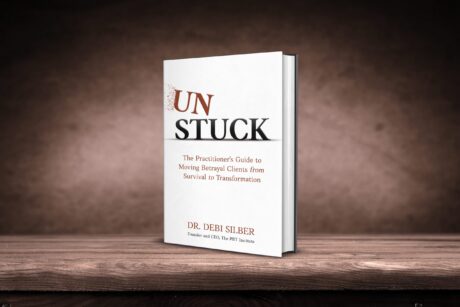
· Learn how betrayal is impacting your clients (even if they’re not coming to you for betrayal) through my newest book (along with the AMAZING bonuses), Unstuck: The Practitioner’s Guide to Moving Betrayal Clients From Survival To Transformation
- Explore our PBT certification program to become equipped to truly serve betrayal clients
- Stop dreading betrayal clients and start confidently guiding them through proven stages of healing
- Add this specialized skill set that enhances your existing practice (you don’t have to become a “betrayal specialist”—this makes you better at everything you already do)
The Bottom Line: Stop Waiting, Start Healing
Time doesn’t heal betrayal wounds. Deliberate, intentional healing does.
If you’ve been waiting for the pain to fade, for the symptoms to disappear, or for a new relationship to fix what’s broken—you could be waiting another 10, 20, or 30 years. And that would be a tragedy because there’s a proven path through this.
You didn’t just survive what you’ve been through. You’re here to transform from it.
The question isn’t whether you can heal. It’s whether you’re ready to move beyond the familiar known and step into the extraordinary life waiting for you in Stages 4 and 5.
Dr. Debi Silber, Founder and CEO of The PBT (Post Betrayal Transformation) Institute and National Forgiveness Day, is an award winning speaker, top rated podcast host, and a 2-time #1 International bestselling author. Her PhD study on how we experience betrayal made 3 groundbreaking discoveries that changes everything we’ve known about how to fully heal (physical, mentally and emotionally) from this specific type of trauma. Creator of the #1 betrayal recovery certification program for life, business, health and leadership coaches, Dr. Debi certifies practitioners globally using her evidence-based framework.